

Sandy Balls
Play next
August 27, 2026 · 6 min read
No random luck bailing you out — every clue narrows exactly one possibility. Here's what rewards careful thinking over quick reflexes, and how to actually get faster at it.
Deduction puzzles run on a different engine than most of browser gaming. There's no reflex test, no random drop, no luck of the draw bailing you out of a bad position — every clue you're given eliminates exactly the possibilities it logically can, and the rest is on you to work through. Get stuck, and the answer isn't a faster mouse hand; it's re-reading what you already know.
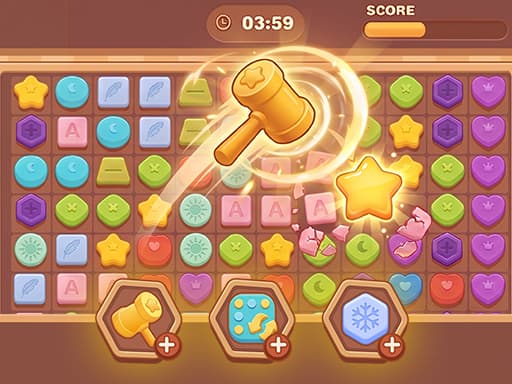
The test is simple: could you solve it with pure logic and zero guessing, given enough time? Shikaku's numbered grid, a cryptogram's letter frequencies, a mastermind code's colored-peg feedback — none of them require luck, only correctly reading what each clue rules out. That's different from a match-3 or a block puzzle, where speed and spatial instinct matter more than working through a chain of "if this, then that."
Crosswords run on a slightly different flavor of deduction — clue-and-cross-check instead of pure elimination — but the same patient, one-clue-at-a-time approach applies. A stubborn corner usually cracks once a crossing word locks in a couple of extra letters, not from staring harder at the original clue.
Pattern-matching puzzles — block puzzles, match-3, sliding tiles — reward quick spatial reads and reflexes; you can often feel the right move before you can fully explain it. Deduction puzzles reward the opposite: slowing down and reasoning through what's actually provable from the clues in front of you. Neither is harder across the board, they just exercise different thinking, which is why it's worth keeping one of each in rotation.
Want the faster, more reflexive side of puzzle gaming instead? The block puzzle guide covers the spatial-fitting games that reward a quick eye over slow reasoning.
Related guides
Choose a letter puzzle or a sliding number board, with practical first-session advice for two PlayKovo games that reward thinking ahead.
puzzleNot every puzzle genre trains the same skill. Here's what each type does, plus the games worth adding to a daily mental warmup.
puzzleNo timer forcing your hand, just you, a grid, and a shape that has to go somewhere. Here's what's worth the mental space.
We use optional cookies for site analytics and site advertising. You can change your choice later. Privacy policy.