

Marble Factory
Play next
More games

August 1, 2026 · 6 min read
Puzzle Games as a Brain Workout: What Actually Trains Your Brain
Not every puzzle genre trains the same skill. Here's what each type does, plus the games worth adding to a daily mental warmup.
Puzzle games are the closest thing gaming has to a gym for your brain. Regular puzzle-solving is linked to better working memory, faster pattern recognition and stronger problem-solving under pressure — and unlike an actual gym, it's a single click away, no membership required.
Not all puzzles train the same thing
- Logic puzzles (pull-the-pin, sokoban) — train sequential reasoning and consequence prediction.
- Spatial puzzles (block puzzles, Tetris-style) — train mental rotation and 2D/3D visualization.
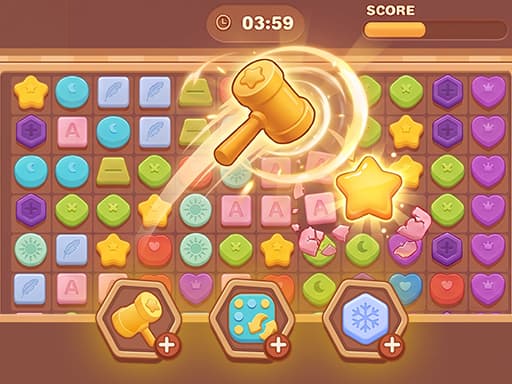
- Pattern puzzles (match-3, connect) — train recognition speed and short-term memory.
- Word puzzles (crosswords, anagrams) — train vocabulary and lexical retrieval.
- Number puzzles (Sudoku, 2048) — train working memory and arithmetic reasoning.
A good place to start
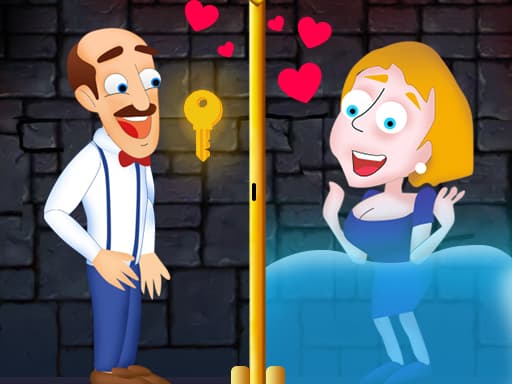
Hero Rescue
Pull the right pins to rescue the hero, save the girl and grab the loot in this brain-teasing puzzle.
Play →Kaku: Shikaku Logic Puzzle
A relaxing take on the classic Shikaku puzzle: divide the grid into rectangles that each match their number. 2,000 handcrafted levels, daily challenges and an IQ score that grows with every solve — free at PlayKovo, no download required.
Play →Tap 3D Wood Block Away
A free 3D block away puzzle — tap to remove the wooden blocks in the right order and clear every tricky level.
Play →Good Sort Master: Triple Match
Arrange items on shelves, place identical items next to each other in order to connect 3 of the same items on the shelf.
Play →The one habit that speeds up every puzzle genre
The single biggest mistake players make is rushing the first move. Before touching anything, spend ten seconds scanning the board — identify constraints, count pieces, look for forced moves where only one action works. That habit alone roughly doubles your solve rate on hard levels.
How much daily puzzle time is actually useful
Cognitive research favors short, consistent sessions — ten to twenty minutes daily — over occasional long ones. Two or three quick puzzle games each morning is a realistic habit that compounds over months, unlike a single marathon session every few weeks.
What's appropriate for younger kids
Most browser puzzle games are family-friendly with zero violence. Simple pattern and match-3 games suit younger kids; logic puzzles like pull-the-pin work well from around ages 8–10. Each game page notes suitability if you're choosing for a kid.
For more of the same, the Brain workout collection gathers logic, word and observation games, and the puzzle category lists all of them.



Related guides
puzzle
Draw-Your-Own-Path Puzzle Games: Draw the Road, Sketch Road and Catch the Cat
Games that hand you a pencil: draw a road for a car, a route for a character or the car itself. Three kinds of drawing games and how to predict what your line will do.
puzzleColor by Number and Nonogram Games Online: Pixel Paint and Picross
Quiet puzzles where a picture slowly appears. Five color-by-number and nonogram games, plus five solving techniques that make hard picross grids logical.
puzzleMaze Games Online: Spin, Tilt, Escape Monsters and Dig Your Own Way
Calm maze puzzles, step-limited mazes, monster mazes and dig-your-own mazes on PlayKovo, with techniques that help in any maze.