
Sandy Balls
Play next

October 7, 2026 · 3 min read
Choose a letter puzzle or a sliding number board, with practical first-session advice for two PlayKovo games that reward thinking ahead.
Choose Lumira when you want to search for a word. Choose Cream 2048 when you want to plan several moves on a board. Both let you think about the next input, but they get you stuck in different ways: Lumira leaves an answer missing from the crossword; Cream 2048 gradually runs out of space.
Word wheel or number board?

Lumira: Word Puzzle Game
Connect letters on the wheel to spell words and fill the crossword grid. Relax through 750 hand-crafted levels and 15 illustrated regions, play in 29 languages, or challenge friends online.
Play →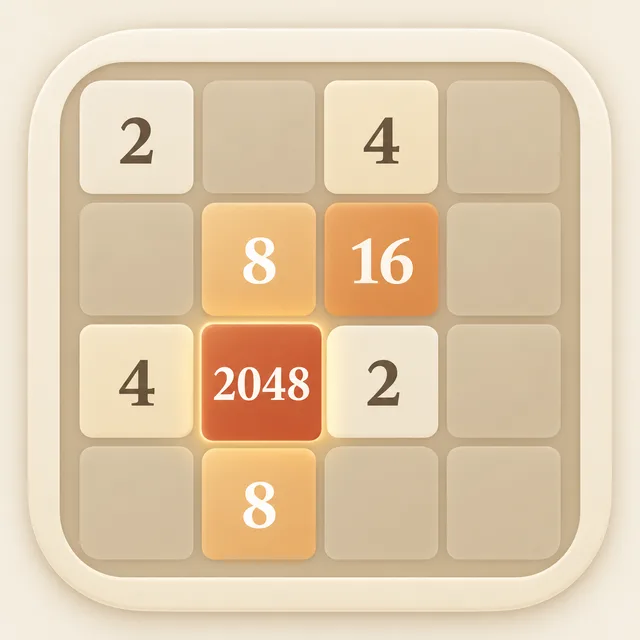
Cream 2048
Slide and merge matching tiles on a warm cream board to reach 2048. Swipe on mobile or use the arrow keys.
Play →Drag through letters on the wheel and release to submit a word. Words required by the crossword fill its slots; extra valid words can earn bonus coins. Select your language before beginning. On desktop you click and drag, while touch uses a swipe through the letters.
Start with a short empty slot. Once a crossing word supplies a letter, stop treating the next answer as a completely open anagram. Its length and that known position eliminate candidates. If you keep seeing the same combination on the wheel, use Shuffle to change the arrangement without changing the letters.
Consider a hint when one missing letter would connect several unfinished answers. Spending it on an isolated word may solve that word; spending it at a useful crossing may also give you a starting point for the neighboring words. The hint costs coins, so decide which part of the grid needs information before tapping it.
A directional move slides every tile on the board. Matching numbers merge into a doubled value; reaching 2048 completes the initial goal, and you can continue afterward. Use arrows or WASD on desktop, directional swipes on a phone, and Z on desktop to undo a move.
Choose a corner for your largest tile and build smaller values near it. Before each swipe, look beyond the pair you want to merge. Will the same move drag your largest tile away from that corner? Will it leave room to bring another matching pair together? A useful merge can still make the rest of the board harder to organize.
Undo is useful for examining that tradeoff. After a move that scatters the board, go back and compare another direction. Pay attention to the arrangement it leaves, not just the points from the immediate merge. You lose when the board is full and no merge remains, so preserving future moves matters.
Both games describe saved progress. Keep in mind that clearing browser data can remove a local save, and a save on one device does not by itself establish that another device shares it.
Related guides
Not every puzzle genre trains the same skill. Here's what each type does, plus the games worth adding to a daily mental warmup.
puzzleNo timer forcing your hand, just you, a grid, and a shape that has to go somewhere. Here's what's worth the mental space.
puzzleNo random luck bailing you out — every clue narrows exactly one possibility. Here's what rewards careful thinking over quick reflexes, and how to actually get faster at it.
We use optional cookies for site analytics and site advertising. You can change your choice later. Privacy policy.